
Goal
Estimate refrigerator and cold-water thawing time from turkey weight, with a selected method and food-safety boundaries.
Worldwide context
Saved once here, used across the site.
Currency changes display only. Country selection guides tax input; no tax rate is guessed.
Estimate refrigerator and cold-water thawing time from turkey weight, with a selected method and food-safety boundaries.
Pounds = kilograms × 2.2046226218; refrigerator estimate = ceiling(pounds ÷ 4) × 24 hours; cold-water estimate = pounds × 0.5 hours.A clearer path to an answer
This page keeps the calculation transparent: define the goal, enter the matching values, inspect the method, and decide what the result means in your situation.
Estimate refrigerator and cold-water thawing time from turkey weight, with a selected method and food-safety boundaries.
Turkey weight · Selected thawing method
Pounds = kilograms × 2.2046226218; refrigerator estimate = ceiling(pounds ÷ 4) × 24 hours; cold-water estimate = pounds × 0.5 hours.
Calculate, review the assumptions below, then compare a related tool when the decision needs more context.
Estimate refrigerator and cold-water thawing time from turkey weight, with a selected method and food-safety boundaries.
Open the Turkey Thawing Time Calculator pageMore food tools
Download PDFDownload Word (.doc)
Enter your values above and choose Calculate to see the result here.
Calculation map
Pounds = kilograms × 2.2046226218; refrigerator estimate = ceiling(pounds ÷ 4) × 24 hours; cold-water estimate = pounds × 0.5 hours.
Bounded, transparent calculation
Your recent runs stay in this browser session only.
Formula: Pounds = kilograms × 2.2046226218; refrigerator estimate = ceiling(pounds ÷ 4) × 24 hours; cold-water estimate = pounds × 0.5 hours.
This page turns a turkey weight into two practical planning estimates based on common USDA guidance: approximately one day per 4–5 pounds in a refrigerator and about 30 minutes per pound in cold water. It keeps the method choice visible and adds food-safety boundaries because thawing time is not the only condition that determines safe handling.
Worked example: About 15 lb; plan 96 refrigerator hours or about 7.5 cold-water hours, with the selected method shown as cold water.
The displayed limits are checked before the handler runs. Model-specific domain checks may also reject impossible or non-finite inputs.
Methodology: This calculator follows the WorldCalculate input, formula, precision, and boundary policy. Read the official methodology.
Calculator usage statistics
This section counts anonymous successful Calculate submissions, not unique visitors. Counts and top tools appear only when trusted aggregate data is available; country analysis is shown only under the same condition and reporting threshold.
Answer-first guide
Estimate refrigerator and cold-water thawing time from turkey weight, with a selected method and food-safety boundaries. Start with one clearly defined goal, enter values in the units shown, and keep the result attached to the assumptions below.
This tool is useful when your question includes turkey thawing calculator, how long to thaw a turkey, turkey defrost time. It returns the outputs declared in the calculator contract rather than a live quote, approval, diagnosis, or professional sign-off.
Turkey weight · Selected thawing method. Keep the same time period, unit system, and currency wherever the form requires comparable values.
Run the worked example first, compare its output with the page's example, then change one input at a time. This makes an unexpected result easier to trace to a unit, boundary, or assumption.
Need a wider view? Browse Food & Recipe Calculators or compare the related tools below. The WorldCalculate methodology explains how formulas, examples, limits, and revisions are reviewed.
Pounds = kilograms × 2.2046226218; refrigerator estimate = ceiling(pounds ÷ 4) × 24 hours; cold-water estimate = pounds × 0.5 hours.
This page turns a turkey weight into two practical planning estimates based on common USDA guidance: approximately one day per 4–5 pounds in a refrigerator and about 30 minutes per pound in cold water. It keeps the method choice visible and adds food-safety boundaries because thawing time is not the only condition that determines safe handling.
About 15 lb; plan 96 refrigerator hours or about 7.5 cold-water hours, with the selected method shown as cold water.
Context and background
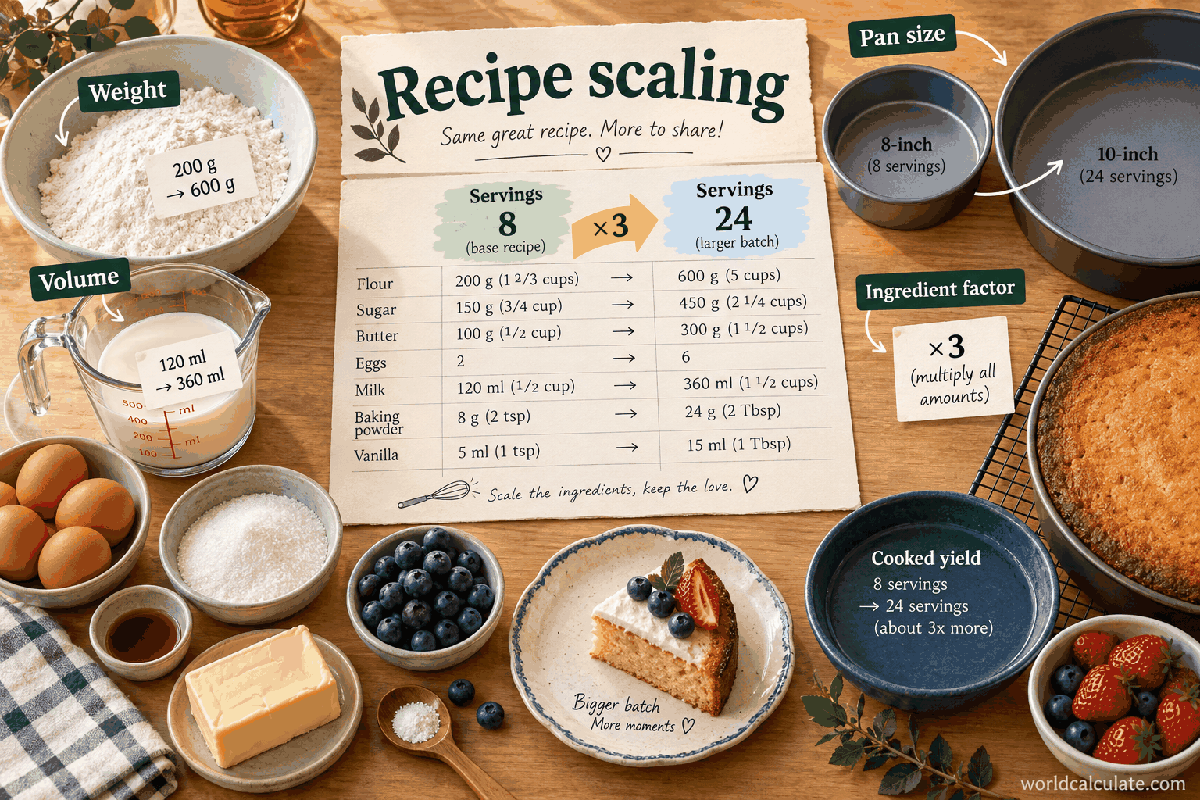
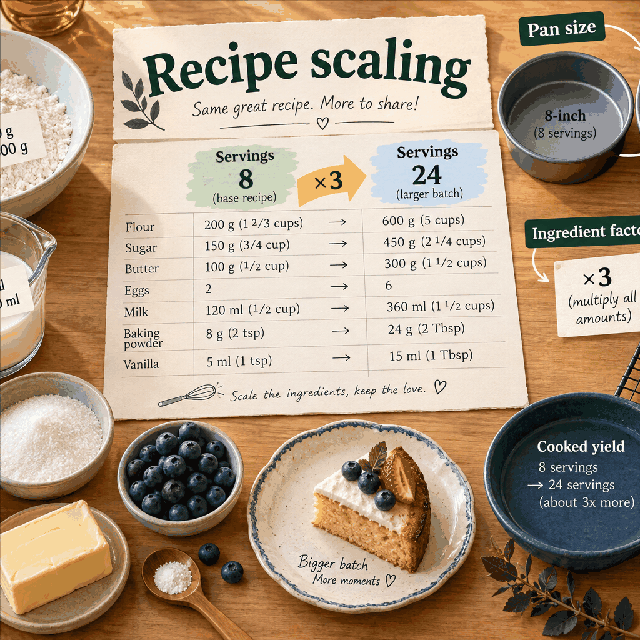
Recipe scaling uses a serving ratio, then keeps the ingredient unit visible. Cooking chemistry, pan size, heat, texture, and safety can require adjustments beyond linear arithmetic.
Scaling a recipe is a familiar applied ratio problem. The useful calculation is the transparent factor; the cooking result still depends on the ingredient and method.
Research and review
Researched by Hassan ALRowaie, Founder and editorial researcher at WorldCalculate.
This guide follows the live calculator's declared inputs, formula, worked example, assumptions, validation boundaries, and source-backed methodology. The review date describes editorial review of the calculator explanation; it is not a promise that external facts or rates remain current.
Thawing a turkey is a schedule problem with a food-safety boundary. This calculator converts the package weight to pounds, gives a conservative refrigerator planning estimate, gives a cold-water estimate, and shows the method selected by the visitor. The calculation is intentionally not a cooking timer and does not replace local food authority guidance. Temperature control, clean handling, water changes, prompt cooking, and appliance instructions matter just as much as the number of hours.
The page answers how much time to reserve for two common methods. Refrigerator thawing is planned in whole days using roughly one day per four pounds, while cold-water thawing is estimated at thirty minutes per pound. The result includes the converted weight, both method estimates, and the selected method's time so a cook can compare options before starting.
The estimate does not say when the turkey is fully thawed by touch, does not calculate oven cooking time, and does not approve a countertop thaw. A schedule should include a check and a safety plan. If the package, bird shape, temperature, or local guidance differs, follow the responsible authority and revise the schedule.
Use the weight printed on the package or a reliable kitchen scale. This calculator accepts kilograms and converts them to pounds using 2.2046226218. A 6.8 kg turkey is about 14.99 lb. If the package includes a range, use the actual bird weight or choose the conservative larger value and record the choice.
Do not confuse the turkey's weight with a serving estimate, the weight of the packaging, or the weight after cooking. Frozen ice and packaging can make a scale reading difficult, so keep the source of the number beside the result. A small weight difference can change a refrigerator plan by a whole day after rounding.
Refrigerator thawing is slow but gives the cook the most scheduling flexibility. The planning rule used here rounds up to a whole day for each four-pound block. A turkey just over eight pounds receives a three-day planning estimate under this conservative rule, while a turkey just under eight pounds receives two days. Keep the bird contained so raw juices cannot contaminate ready-to-eat food.
Maintain the refrigerator at the temperature recommended by the food authority and allow space for air circulation and a tray. The calculator cannot measure the appliance temperature or confirm that the centre has thawed. Build in time to inspect the cavity, remove giblets safely, and continue following the package instructions.
Cold-water thawing uses about thirty minutes per pound in the planning estimate. The turkey should be in a leak-proof bag and submerged in cold water, with the water changed regularly according to official guidance. A 15 lb bird therefore requires about 7.5 hours under the simple rate. The process needs active supervision and a clean preparation area.
Cold-water thawing is not a reason to leave the bird in warm or standing water. Water temperature, packaging, sink hygiene, and the timing of the next step matter. Plan to cook promptly after this method, and do not return a partly thawed turkey to an uncontrolled environment because the arithmetic looked complete.
For 6.8 kg, the conversion is 6.8×2.2046226218 = about 14.99 lb. Refrigerator time using the conservative whole-day rule is ceiling(14.99÷4)×24 = 96 hours, or four days. Cold-water time is 14.99×0.5 = about 7.5 hours.
Those estimates describe calendar planning, not a guarantee. A cook might choose the refrigerator several days before the meal, or choose cold water on the final day with enough supervision. The selected method appears in the result so a printed or shared schedule does not lose the choice.
A turkey does not thaw in perfectly uniform four-pound blocks. The whole-day ceiling is a conservative scheduling device that avoids planning exactly to a boundary. If the bird is larger, unusually shaped, tightly packed, or the refrigerator is crowded, additional time may be sensible. The product label or food authority can provide more specific instructions.
Rounding up creates a safety margin in the schedule, not extra permission to hold the raw turkey indefinitely. Once thawed, follow the guidance for how long it may remain refrigerated before cooking. Mark the start time and check the package so the household can act on both sides of the thawing window.
Safe thawing keeps the food cold enough to limit bacterial growth while allowing the ice to melt. The calculator has no temperature sensor and cannot validate the refrigerator, water, room, or bird core. Use a reliable appliance thermometer and the current guidance for the country where the food is prepared.
A numerical estimate should never override an observed unsafe condition. If a package leaks, the refrigerator warms, the turkey sits at room temperature, or cross-contamination occurs, stop and follow food-safety advice. When in doubt about a real food-safety decision, consult the responsible food authority rather than extending the calculator's formula.
Keep the turkey in its original packaging when appropriate for refrigerator thawing and place it in a tray or pan that can contain leaks. For cold-water thawing, use a leak-proof bag so water does not enter and raw juices do not spread into the sink. Wash hands and clean surfaces after handling the package.
Do not rinse raw poultry as a routine step; splashing can spread contamination. Keep ready-to-eat foods, utensils, and serving dishes separate from the raw bird. The calculator's time result cannot correct a poor workflow, so include cleaning and separation in the kitchen plan.
A turkey may feel thawed on the outside while ice remains in the cavity or near joints. Check according to the package or food authority instructions and handle the giblet packet carefully. Do not force frozen parts with a sharp tool or use hot water to accelerate the process.
If the turkey is only partly thawed when the plan reaches the end, reassess the method and the cooking instructions. A partial result is a signal to use a safe adjustment, not to guess. The calculator gives an estimate from weight; the actual condition of the bird is the final practical check.
Some authorities permit microwave thawing when the bird fits the appliance and the manufacturer's instructions are followed. Microwave power, shape, turntable, packaging, and partial cooking make a universal time formula unreliable. This page does not calculate microwave time; use the appliance manual and cook immediately if that method is allowed.
Do not select the refrigerator or cold-water result as a substitute for microwave instructions. The methods have different heat and temperature histories. A clear boundary is safer than a precise-looking number built from an appliance the calculator cannot inspect.
Room-temperature thawing can leave outer layers in a warmer range while the interior remains frozen. A counter, balcony, car, or warm sink is not a controlled thawing method. The page offers refrigerator and cold water because those methods can be managed according to recognized food-safety guidance.
If a household has already left a turkey out, do not use the calculator to decide that a remaining number of hours makes it safe. Contact the local food-safety authority or discard according to its guidance. The right response to an uncontrolled condition is a safety decision, not a better multiplication.
Work backward from the planned serving time. For a refrigerator method, reserve the whole thawing window plus time for inspection and preparation. For cold water, reserve the calculated active window, water changes, cleanup, and immediate cooking. Keep the turkey away from the final cooking rush if another person needs the sink or refrigerator space.
Write the start date and method on a visible kitchen plan, but do not place raw-food notes where they can contaminate a clean surface. A shared schedule helps prevent a last-minute counter thaw. The calculator is most useful when it supports a calm workflow instead of being opened after the safe options are gone.
Thawing time depends mainly on weight, method, temperature control, and shape. Cooking time depends on oven or appliance conditions, whether the bird is stuffed, the starting temperature, and the internal temperature reached. This page intentionally reports only thawing so the user does not confuse the two schedules.
After thawing, use a tested cooking method and a food thermometer according to current guidance. The bird is not safe because a timer ended; it is safe only when the applicable cooking and handling conditions are met. Keep the two decisions separate in a meal plan.
The formula is based on common USDA planning rates, while food-safety rules and terminology vary by country. A visitor in Bahrain, the United Kingdom, India, Canada, Australia, or another location should check the authority serving that location and the product label. Country context in a website interface must not silently invent a legal or medical rule.
If the local guidance uses a different rate or temperature, enter the package weight here for unit support but use the local method and schedule in the final plan. Record which authority and date were consulted so an old holiday note is not mistaken for current universal guidance.
Typical errors include entering kilograms as pounds, forgetting that a cold-water plan is active rather than unattended, using warm water, leaving the bird unwrapped, and counting cooking time as thawing time. Another error is rounding a refrigerator estimate down because the meal is tomorrow.
Check the input unit, method, start time, fridge temperature, water-change plan, and next action. If the turkey is larger than the appliance or the schedule is too short, use a safer alternative or contact a food professional. A correct formula cannot rescue an impossible schedule.
A professional or family kitchen note can include package weight, conversion, method, start time, estimated finish, food authority source, refrigerator or water conditions, and cooking handoff. The note should say that the hours are estimates and list the person responsible for the next check.
For a large event, keep raw poultry handling separate from service preparation and use a clear responsibility handoff. A calculator output without ownership can still result in a missed water change or a forgotten bird. Good scheduling includes people, not only numbers.
Confirm the package weight and kilogram unit. Choose refrigerator or cold water, read the selected estimate, and schedule a check before the planned meal. Keep the bird cold, contain leaks, wash hands and surfaces, change cold water as directed, and follow the current local food authority guidance.
Treat the result as planning support, not a safety certificate. If the actual conditions differ from the assumptions, stop and obtain advice. The strongest answer is a safe, traceable kitchen plan that uses the weight calculation while respecting the limits of any web tool.
A refrigerator thaw needs room for the turkey, a tray, and safe separation from ready-to-eat foods. Check the shelf height and the location of raw poultry before buying the bird. If a crowded refrigerator cannot maintain a stable cold temperature or contain leaks, choose a safer arrangement before the thaw begins.
Write the bird's start time and expected check on the meal plan. Avoid stacking food on top of the package or placing it where a leak can reach salad, fruit, or prepared dishes. A physical plan is part of the safety control that the time formula cannot provide.
Cold-water thawing is an active method. The bag must remain sealed, the water must stay cold, and the water-change schedule must be followed. Arrange a timer and a person responsible for each check. If the process stops for an unknown period, do not simply subtract the missing time from the estimate.
The sink and nearby utensils should be cleaned before and after the raw poultry is handled. Keep children and pets away from the water and package. At the end of the estimate, move directly to the next safe preparation step rather than leaving the turkey unattended.
The simple rate uses weight as the main planning input, but a very large or unusually shaped bird may thaw unevenly. Packaging, cavity geometry, frozen parts, and appliance conditions can change the practical result. Start earlier and allow a check rather than treating the formula as a promise at a boundary.
If the bird is too large for a safe sink, tray, refrigerator, or cooking appliance, resolve that logistics problem first. A time estimate cannot make an unsuitable container or appliance safe. For institutional kitchens, use the written food-safety plan and assigned supervisor.
Whether a turkey is stuffed changes preparation and cooking planning. This calculator does not estimate stuffing thawing or cooking. Follow the current food authority and product instructions for stuffing, cavity handling, and internal temperature checks.
Do not pack a cavity with ingredients merely to occupy unused space while the turkey is still frozen. Keep ingredients separate and cold until the approved preparation step. The thawing result should be handed off to the cooking method with those conditions clearly stated.
The cold-water estimate assumes the turkey will be cooked promptly after thawing. Do not treat the end of the timer as permission to hold it for another day under an unrelated storage plan. Schedule the oven, pan, thermometer, and clean preparation area before beginning the active thaw.
If the meal is delayed, follow local food-safety guidance for the actual temperature history. The calculator cannot reconstruct how long the bird was above or below a safe threshold. Record the event rather than guessing a new safe time from the original weight.
Raw poultry can contaminate hands, sinks, counters, towels, handles, and utensils. Wash hands with soap, clean and sanitize surfaces as directed by local guidance, and launder or discard contaminated materials appropriately. Keep the thawing tray separate from serving equipment.
Do not rely on cooking to clean a surface that touched raw juices. The cooking step addresses the bird under the correct conditions, not the kitchen surfaces or foods that may have been contaminated. Add cleanup time to the meal schedule before guests arrive.
Consult a food-safety authority, qualified kitchen supervisor, or the product manufacturer when the package instructions conflict, the bird has been held at an uncertain temperature, the appliance is unreliable, or the meal serves a vulnerable group. Do not use a web estimate to settle a high-consequence uncertainty.
The page is useful for ordinary planning when its assumptions are true. It is not a diagnosis of spoilage, a legal standard, or a replacement for a food-safety plan. A cautious stop and an informed decision are better than a precise-looking schedule built on unknown conditions.
Some frozen turkeys include preparation instructions, a self-basting treatment, a pop-up indicator, or a warning about packaging. Read the label before deciding how to thaw. The calculator supports weight and time planning but does not override product-specific directions.
If the product is pre-seasoned, portioned, or supplied with a special bag, keep those details in the kitchen note. A local retailer or authority may also use a different unit or rate. Translate the weight carefully and preserve the source of the instruction.
A holiday schedule should include a backup if the refrigerator plan starts late or the meal time changes. The cold-water method requires active time and a clean sink, so it is not a passive emergency replacement. Decide who can supervise the thaw and who can move the cooking handoff.
Do not wait until guests arrive to discover that the bird needs several more hours. Enter the weight as soon as the package is purchased, place the selected method on the calendar, and set a check before the safe window becomes a crisis.
A simple household plan can note refrigerator temperature, cold-water changes, start time, and the time the turkey entered cooking. A larger kitchen may need a formal log. These observations provide context if the schedule changes and help identify where a process failed.
The calculator cannot read or store those temperatures. Treat them as separate evidence and do not fill a missing record with an assumed default. A transparent unknown is safer than a fabricated number that appears precise.
Thawing ends before cooking, serving, and leftover storage begin. Follow current food-safety guidance for cooking temperature, serving time, cooling, refrigeration, and reheating. The calculator intentionally does not combine those stages into one countdown.
A good meal plan names the next responsible person at each handoff: thaw check, preparation, cooking, thermometer check, serving, and leftovers. The weight estimate supports the first handoff while the remaining steps use their own tested guidance.
After the meal, record the package weight, method, actual start and finish, whether the centre was thawed, and any adjustment made. Compare the observation with the estimate without treating one turkey as a universal calibration. Different shapes, packaging, appliances, and room conditions can produce different practical times.
This record can make the next plan calmer and more conservative. Keep the source guidance date and local authority with it, because food-safety recommendations and product instructions can change. A remembered holiday shortcut is not a substitute for a current check.
When guests include young children, older adults, pregnant people, or people with weakened immune systems, use the current food-safety advice with extra care. A thawing estimate does not lower the importance of clean handling, proper cooking, thermometer checks, and prompt storage.
Tell the person responsible for cooking about the thawing method and any uncertainty. If the temperature history is unknown, ask a qualified food-safety source rather than offering reassurance from the displayed hours. The safest plan is one that makes uncertainty visible.
A useful handoff states weight, method, start time, estimated end time, cold conditions, package status, next action, and responsible person. It can be written on a meal plan or kitchen log without storing unnecessary personal information. The handoff should make clear that the calculator gives a planning estimate.
At the next step, check the actual bird and follow the cooking or food-safety guidance that applies. If the check disagrees with the estimate, the observed condition wins. Record the difference so a future schedule can be improved without turning a single result into a promise.
Estimate refrigerator and cold-water thawing time from turkey weight, with a selected method and food-safety boundaries.
Pounds = kilograms × 2.2046226218; refrigerator estimate = ceiling(pounds ÷ 4) × 24 hours; cold-water estimate = pounds × 0.5 hours. This page turns a turkey weight into two practical planning estimates based on common USDA guidance: approximately one day per 4–5 pounds in a refrigerator and about 30 minutes per pound in cold water. It keeps the method choice visible and adds food-safety boundaries because thawing time is not the only condition that determines safe handling.
Enter Turkey weight, Selected thawing method, then choose Calculate.
The turkey is frozen and its package weight is entered in kilograms. The refrigerator is maintained at or below the food-safety temperature recommended by the responsible authority. The refrigerator estimate uses a conservative whole-day planning rule of about 4 pounds per day. The cold-water estimate uses approximately 30 minutes per pound and assumes regular water changes. Cold-water thawing is followed by prompt cooking according to food-safety guidance. Microwave thawing, stuffing, brining, cooking time, and appliance performance are not calculated. Packaging remains intact or is replaced with a leak-proof bag for cold-water thawing. Local food authorities and the product or appliance instructions take precedence over this planning estimate.
This calculator is part of the WorldCalculate library. Its formula, example, assumptions, input bounds, and output formatting follow the official methodology.
These WorldCalculate collections connect this tool with related questions while keeping each calculation separate and transparent.