
Goal
Estimate the scheduled interest-only payment, interest paid during the interest-only period, and principal balance that remains when the period ends.
Worldwide context
Saved once here, used across the site.
Currency changes display only. Country selection guides tax input; no tax rate is guessed.
Estimate the scheduled interest-only payment, interest paid during the interest-only period, and principal balance that remains when the period ends.
Periodic interest-only payment = principal × (annual rate ÷ 100) ÷ payments per year; interest-only interest = periodic payment × interest-only periods; remaining principal = starting principal when no principal is repaid.A clearer path to an answer
This page keeps the calculation transparent: define the goal, enter the matching values, inspect the method, and decide what the result means in your situation.
Estimate the scheduled interest-only payment, interest paid during the interest-only period, and principal balance that remains when the period ends.
Starting principal · Annual interest rate · Interest-only period · Payments per year
Periodic interest-only payment = principal × (annual rate ÷ 100) ÷ payments per year; interest-only interest = periodic payment × interest-only periods; remaining principal = starting principal when no principal is repaid.
Calculate, review the assumptions below, then compare a related tool when the decision needs more context.
Estimate the scheduled interest-only payment, interest paid during the interest-only period, and principal balance that remains when the period ends.
Open the Interest-Only Mortgage Payment Screen pageMore finance tools
Download PDFDownload Word (.doc)
Enter your values above and choose Calculate to see the result here.
Calculation map
Periodic interest-only payment = principal × (annual rate ÷ 100) ÷ payments per year; interest-only interest = periodic payment × interest-only periods; remaining principal = starting principal when no principal is repaid.
Bounded, transparent calculation
Your recent runs stay in this browser session only.
Formula: Periodic interest-only payment = principal × (annual rate ÷ 100) ÷ payments per year; interest-only interest = periodic payment × interest-only periods; remaining principal = starting principal when no principal is repaid.
This screen isolates the interest-only phase of a fixed-rate loan. It does not pretend that a low initial payment is the full cost of borrowing: because the scheduled payment covers interest only, the principal balance remains in this model until the contract changes or the balance is paid.
Worked example: The monthly interest-only payment is 1,250 currency units; 60 months costs 75,000 in modeled interest and leaves 250,000 principal.
The displayed limits are checked before the handler runs. Model-specific domain checks may also reject impossible or non-finite inputs.
Methodology: This calculator follows the WorldCalculate input, formula, precision, and boundary policy. Read the official methodology.
Calculator usage statistics
This section counts anonymous successful Calculate submissions, not unique visitors. Counts and top tools appear only when trusted aggregate data is available; country analysis is shown only under the same condition and reporting threshold.
Answer-first guide
Estimate the scheduled interest-only payment, interest paid during the interest-only period, and principal balance that remains when the period ends. Start with one clearly defined goal, enter values in the units shown, and keep the result attached to the assumptions below.
This tool is useful when your question includes interest-only mortgage calculator, interest-only payment, mortgage balloon balance. It returns the outputs declared in the calculator contract rather than a live quote, approval, diagnosis, or professional sign-off.
Starting principal · Annual interest rate · Interest-only period · Payments per year. Keep the same time period, unit system, and currency wherever the form requires comparable values.
Run the worked example first, compare its output with the page's example, then change one input at a time. This makes an unexpected result easier to trace to a unit, boundary, or assumption.
Need a wider view? Browse Finance Calculators or compare the related tools below. The WorldCalculate methodology explains how formulas, examples, limits, and revisions are reviewed.
Periodic interest-only payment = principal × (annual rate ÷ 100) ÷ payments per year; interest-only interest = periodic payment × interest-only periods; remaining principal = starting principal when no principal is repaid.
This screen isolates the interest-only phase of a fixed-rate loan. It does not pretend that a low initial payment is the full cost of borrowing: because the scheduled payment covers interest only, the principal balance remains in this model until the contract changes or the balance is paid.
The monthly interest-only payment is 1,250 currency units; 60 months costs 75,000 in modeled interest and leaves 250,000 principal.
Context and background
Finance tools compare amounts across time, rates, and definitions. A payment, balance, return, or ratio is meaningful only when its period, cash-flow timing, and units are stated.
Financial planning developed around making cash flows and performance comparable. WorldCalculate keeps that practical tradition visible through explicit formulas and scenario inputs rather than assuming a universal contract.
Research and review
Researched by Hassan ALRowaie, Founder and editorial researcher at WorldCalculate.
This guide follows the live calculator's declared inputs, formula, worked example, assumptions, validation boundaries, and source-backed methodology. The review date describes editorial review of the calculator explanation; it is not a promise that external facts or rates remain current.
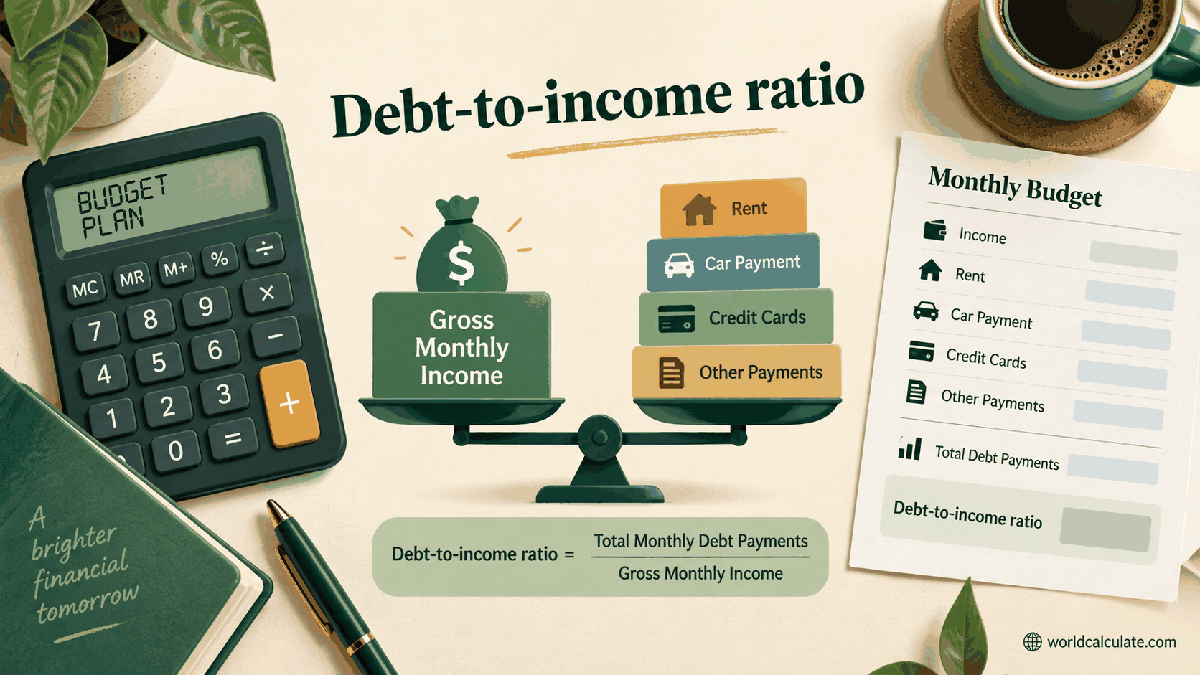
An interest-only mortgage can look affordable because the scheduled payment is smaller during the opening period. The missing question is what that payment does not accomplish: it pays the modeled interest but does not reduce the principal. This WorldCalculate screen keeps the rate, payment frequency, period, interest total, and remaining balance together so a reader can see the trade-off before comparing the later loan terms.
An interest-only payment is a scheduled payment that covers the interest due for the period without applying a principal reduction under the selected model. The principal is the amount originally borrowed. If that amount is 250,000 and the annual rate is 6%, a monthly interest-only payment is 250,000 × 0.06 ÷ 12 = 1,250 currency units. The payment is lower than a fully amortizing payment because the schedule is not asking it to retire the balance at the same time.
The calculator is deliberately narrow. It estimates the interest-only phase and makes the unchanged balance visible. It does not decide whether a specific mortgage is affordable, suitable, legal, or available in a country. It also does not assume that every interest-only loan later follows the same repayment path.
The periodic rate is the entered annual percentage divided by 100 and then divided by the number of payments per year. Periodic payment = principal × periodic rate. The model multiplies that payment by the number of interest-only periods to estimate the interest paid during the phase. Monthly is the default, but quarterly, twice-yearly, and yearly views help explain that the frequency convention changes the amount due each time while preserving the annual simple rate assumption.
The period input is entered in months because mortgage discussions often describe an interest-only window that way. The handler requires a whole number of months. When the selected frequency does not divide twelve evenly, the page still reports the explicit period convention rather than silently inventing an irregular payment calendar; the result should then be compared with the contract's actual schedule.
With 250,000 principal, a 6% annual rate, monthly payments, and 60 interest-only months, the monthly rate is 0.06 ÷ 12 = 0.005. The payment is 250,000 × 0.005 = 1,250. Across 60 scheduled payments, the modeled interest is 1,250 × 60 = 75,000. The starting principal remains 250,000 because no principal reduction was included.
That last line is the most important output. The 75,000 is not the amount needed to own the property or retire the debt. It is the interest total for this one phase. A later recast, refinance, sale, or lump-sum repayment must be represented with another schedule and the actual loan documents.
When an interest-only phase ends and the balance must be repaid, the remaining principal is still present. A fully amortizing payment then has to cover both interest and principal over the remaining repayment period. If the remaining term is short, that payment can be materially higher than the opening interest-only amount. If a contract instead requires a lump sum, the balance can become a balloon payment.
The screen does not calculate that later payment because doing so requires the post-interest-only term, rate rules, payment timing, and contract structure. Keeping the phases separate is more honest than presenting a guessed later payment as if it were a quote.
The result covers only the entered principal and interest. A real mortgage payment may also include property taxes, homeowners insurance, mortgage insurance, association charges, servicing fees, and other costs. Those items can change independently of the interest-only calculation. A comparison that uses only the first payment can therefore understate the monthly cash requirement.
Use the result as a question list: what is the principal after the interest-only period, when does the payment change, what rate applies after the change, and what costs sit outside principal and interest? A written loan estimate or contract is the source for those answers.
At a zero annual rate, the modeled interest-only payment and phase interest are zero, but the principal still remains. That is not a claim that a real lender will offer a zero-cost loan; it is the direct result of the entered scenario. Increasing the rate raises the payment linearly in this model, while increasing the period raises total phase interest without changing the periodic payment.
The calculator rejects non-finite values, negative principal, negative rates, non-whole months, and unsupported frequencies. It does not clamp an invalid entry to a nearby valid value. This makes a boundary mistake visible instead of hiding it inside a plausible-looking result.
Run the same principal with an interest-only period and with a fully amortizing loan from the regular loan calculator. Compare periodic payment, total interest, remaining balance, and the length of the repayment window. Change only one assumption at a time so a lower payment is not mistaken for a lower cost.
For a real offer, record the rate type, reset dates, amortization term, balloon language, fees, escrow, insurance, and any prepayment restrictions. The calculator can organize the arithmetic, but it cannot read an agreement or forecast a property sale or refinance.
This is a fixed-rate arithmetic screen, not a mortgage eligibility tool, legal interpretation, tax calculation, affordability approval, or investment recommendation. It does not model negative amortization, adjustable rates, payment caps, delinquency, foreclosure, property value, currency conversion, or local consumer-protection rules. The word mortgage does not make the result country-specific; the user must use the currency and contract conventions appropriate to the real loan.
Because the principal remains due, a positive-looking monthly budget can still hide a large later obligation. Read the CFPB guidance and actual disclosure documents, ask what happens when the period ends, and obtain qualified local help when the decision is significant.
Does an interest-only payment reduce principal? Not in this calculator's stated phase model. What remains after five years? The entered starting principal, unless a separate principal payment is made outside the model. Does the result include taxes and insurance? No. Can it predict the later payment? No; the later schedule requires additional contract fields. Is a lower opening payment automatically cheaper? No; compare total interest and the remaining balance, not only the first payment.
Estimate the scheduled interest-only payment, interest paid during the interest-only period, and principal balance that remains when the period ends.
Periodic interest-only payment = principal × (annual rate ÷ 100) ÷ payments per year; interest-only interest = periodic payment × interest-only periods; remaining principal = starting principal when no principal is repaid. This screen isolates the interest-only phase of a fixed-rate loan. It does not pretend that a low initial payment is the full cost of borrowing: because the scheduled payment covers interest only, the principal balance remains in this model until the contract changes or the balance is paid.
Enter Starting principal, Annual interest rate, Interest-only period, Payments per year, then choose Calculate.
The entered rate is a fixed nominal annual rate for the modeled period. The loan makes equal interest-only payments at the selected frequency. No principal is paid during the interest-only phase. The number of months is converted to payment periods using the selected payments-per-year convention and must represent a whole number of months. Fees, points, taxes, insurance, mortgage insurance, late charges, and prepayment terms are excluded. The model does not calculate the later fully amortizing payment or a refinance outcome. A zero rate produces zero scheduled interest while the principal still remains due. The balance result is a scenario, not a lender payoff quote or approval decision. Actual contracts can change rates, payment dates, capitalization rules, or repayment requirements. A visitor should read the loan documents and obtain qualified local advice before borrowing.
This calculator is part of the WorldCalculate library. Its formula, example, assumptions, input bounds, and output formatting follow the official methodology.
These WorldCalculate collections connect this tool with related questions while keeping each calculation separate and transparent.