
Goal
Estimate hot-tub heating, pump, refill, recurring electricity, and first-fill costs from your equipment and local prices.
Worldwide context
Saved once here, used across the site.
Currency changes display only. Country selection guides tax input; no tax rate is guessed.
Estimate hot-tub heating, pump, refill, recurring electricity, and first-fill costs from your equipment and local prices.
Initial heat energy = volume × 4.186 kJ/(kg·°C) × temperature rise ÷ 3,600 ÷ efficiency. Monthly electricity = heater power × heater hours × days + pump power × pump hours × days. Monthly water cost = refill litres ÷ 1,000 × water price; first-month total adds the initial heat-up cost.A clearer path to an answer
This page keeps the calculation transparent: define the goal, enter the matching values, inspect the method, and decide what the result means in your situation.
Estimate hot-tub heating, pump, refill, recurring electricity, and first-fill costs from your equipment and local prices.
Water volume · Initial temperature rise · Heater power · Heating efficiency · Average heater hours per day · Pump power · Pump hours per day · Days in planning month · Electricity price · Monthly refill volume · Water cost
Initial heat energy = volume × 4.186 kJ/(kg·°C) × temperature rise ÷ 3,600 ÷ efficiency. Monthly electricity = heater power × heater hours × days + pump power × pump hours × days. Monthly water cost = refill litres ÷ 1,000 × water price; first-month total adds the initial heat-up cost.
Calculate, review the assumptions below, then compare a related tool when the decision needs more context.
Estimate hot-tub heating, pump, refill, recurring electricity, and first-fill costs from your equipment and local prices.
Open the Hot-Tub Operating Cost Calculator pageMore utility tools
Download PDFDownload Word (.doc)
Enter your values above and choose Calculate to see the result here.
Calculation map
Initial heat energy = volume × 4.186 kJ/(kg·°C) × temperature rise ÷ 3,600 ÷ efficiency. Monthly electricity = heater power × heater hours × days + pump power × pump hours × days. Monthly water cost = refill litres ÷ 1,000 × water price; first-month total adds the initial heat-up cost.
Bounded, transparent calculation
Your recent runs stay in this browser session only.
Formula: Initial heat energy = volume × 4.186 kJ/(kg·°C) × temperature rise ÷ 3,600 ÷ efficiency. Monthly electricity = heater power × heater hours × days + pump power × pump hours × days. Monthly water cost = refill litres ÷ 1,000 × water price; first-month total adds the initial heat-up cost.
The calculator separates one initial heat-up from recurring heater and pump runtime and refill cost. It is a planning estimate: real hot-tub energy use depends on ambient temperature, cover, insulation, setpoint, filtration, equipment cycling, and local tariffs.
Worked example: The worksheet separates the initial heat-up from recurring monthly heater and pump electricity and adds the 200 L refill-water cost.
The displayed limits are checked before the handler runs. Model-specific domain checks may also reject impossible or non-finite inputs.
Methodology: This calculator follows the WorldCalculate input, formula, precision, and boundary policy. Read the official methodology.
Calculator usage statistics
This section counts anonymous successful Calculate submissions, not unique visitors. Counts and top tools appear only when trusted aggregate data is available; country analysis is shown only under the same condition and reporting threshold.
Answer-first guide
Estimate hot-tub heating, pump, refill, recurring electricity, and first-fill costs from your equipment and local prices. Start with one clearly defined goal, enter values in the units shown, and keep the result attached to the assumptions below.
This tool is useful when your question includes hot tub cost calculator, spa electricity cost, hot tub running cost. It returns the outputs declared in the calculator contract rather than a live quote, approval, diagnosis, or professional sign-off.
Water volume · Initial temperature rise · Heater power · Heating efficiency · Average heater hours per day · Pump power · Pump hours per day · Days in planning month · Electricity price · Monthly refill volume · Water cost. Keep the same time period, unit system, and currency wherever the form requires comparable values.
Run the worked example first, compare its output with the page's example, then change one input at a time. This makes an unexpected result easier to trace to a unit, boundary, or assumption.
Need a wider view? Browse Everyday Utility Calculators or compare the related tools below. The WorldCalculate methodology explains how formulas, examples, limits, and revisions are reviewed.
Initial heat energy = volume × 4.186 kJ/(kg·°C) × temperature rise ÷ 3,600 ÷ efficiency. Monthly electricity = heater power × heater hours × days + pump power × pump hours × days. Monthly water cost = refill litres ÷ 1,000 × water price; first-month total adds the initial heat-up cost.
The calculator separates one initial heat-up from recurring heater and pump runtime and refill cost. It is a planning estimate: real hot-tub energy use depends on ambient temperature, cover, insulation, setpoint, filtration, equipment cycling, and local tariffs.
The worksheet separates the initial heat-up from recurring monthly heater and pump electricity and adds the 200 L refill-water cost.
Context and background
Everyday tools turn a measured quantity, a rate, or a simple ratio into a practical estimate while leaving live prices, routes, and local rules to the visitor.
Practical calculators are small applied models. Their value is that a person can inspect an assumption, change it, and see how the decision changes without mistaking the result for a promise.
Research and review
Researched by Hassan ALRowaie, Founder and editorial researcher at WorldCalculate.
This guide follows the live calculator's declared inputs, formula, worked example, assumptions, validation boundaries, and source-backed methodology. The review date describes editorial review of the calculator explanation; it is not a promise that external facts or rates remain current.
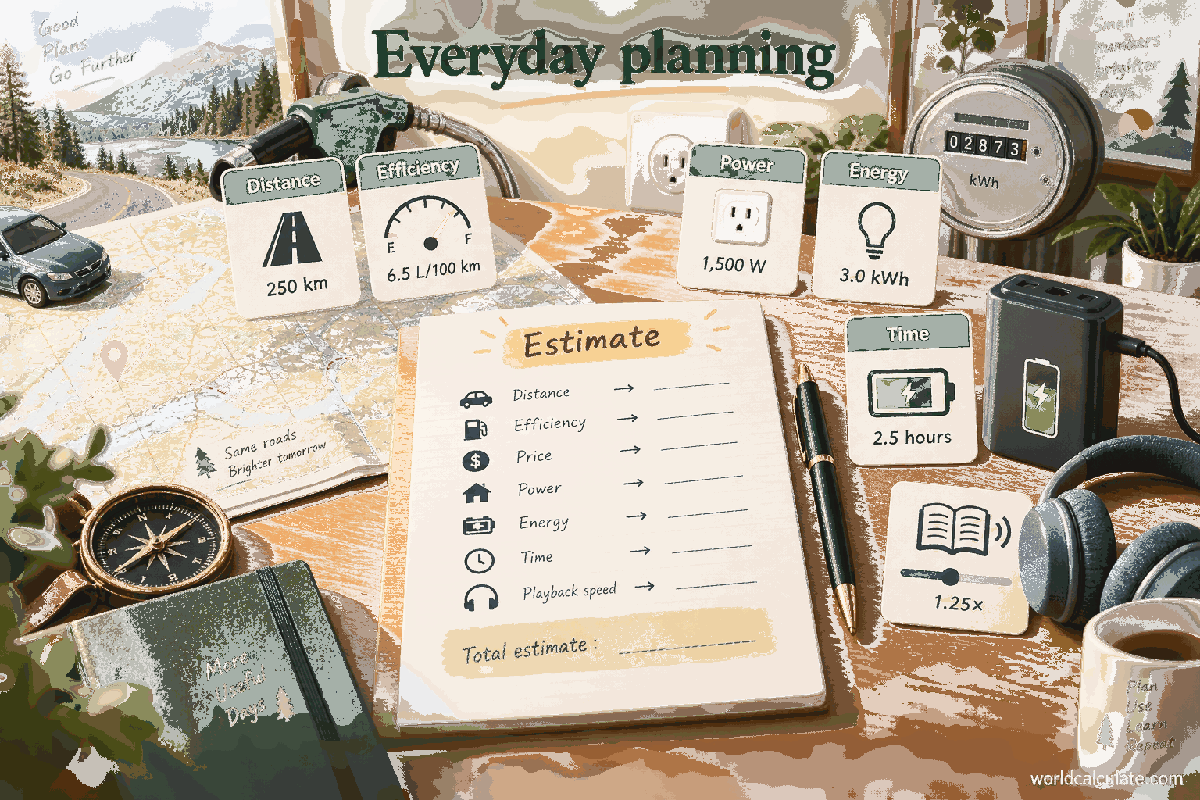
Hot-tub cost is not one number because first heating, heat maintenance, pump circulation, refill water, and local tariffs behave differently. This page keeps those pieces visible so a visitor can replace the planning assumptions with measured runtime and real bills.
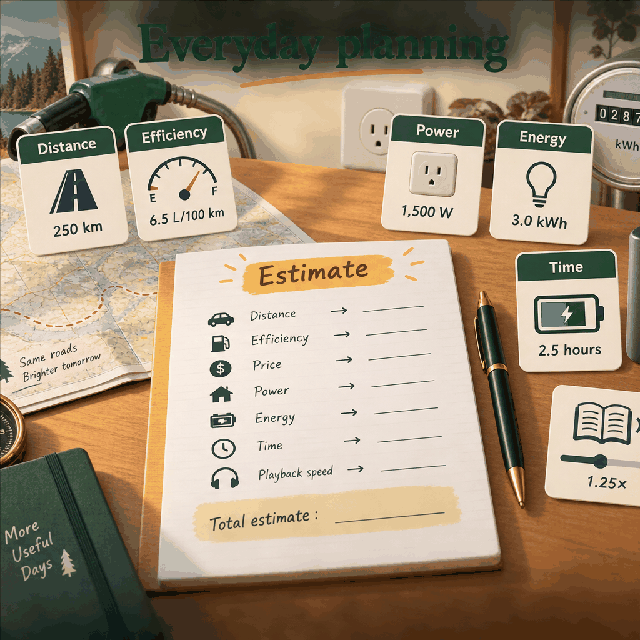
Enter volume, temperature rise, heater and pump ratings, runtime, days, electricity price, refill volume, and water price. The result reports initial heat-up and recurring monthly components separately.
The first heat-up uses water mass, specific heat, and temperature rise. Dividing by 3,600 converts kilojoules to kilowatt-hours, and the entered efficiency increases required input energy when efficiency is below 100 percent.
Average heater power times heating hours and days gives a planning energy quantity. Pump power is calculated separately because filtration and circulation can continue even when the heater is not actively heating.
With 1,500 L and a 23°C rise, the initial heat-up is a one-time component. A 3 kW heater running two hours per day and a 0.5 kW pump running four hours per day are then modeled across 30 days for the recurring estimate.
Refill volume in litres is divided by 1,000 to obtain cubic metres before multiplying by the entered water price. Use a local water-and-wastewater price when that is what the bill charges.
A hot tub loses heat through the water surface, cover, shell, plumbing, wind, and ambient air. Thermostats cycle equipment, and filtration, sanitation, weather, and user behavior change duty cycle. Those effects are represented only through the entered average hours.
The calculator does not assume a country or currency. Enter the tariff unit shown on the bill, including time-of-use or demand effects only if you fold them into a defensible average price.
A cost estimate is not an electrical design. Confirm breaker, conductor, disconnect, grounding, wet-location requirements, installation, and manufacturer instructions with qualified local professionals.
Do not enter heater watts in a kW field, count the initial heat-up as daily heater hours without intending that, or use a full tub volume for every monthly refill. Keep measured runtime and tariff evidence with the estimate.
This is a first-pass operating-cost worksheet. It does not size a heater, predict exact temperature recovery, price chemicals, or guarantee a monthly bill under changing weather and tariffs.
Estimate hot-tub heating, pump, refill, recurring electricity, and first-fill costs from your equipment and local prices.
Initial heat energy = volume × 4.186 kJ/(kg·°C) × temperature rise ÷ 3,600 ÷ efficiency. Monthly electricity = heater power × heater hours × days + pump power × pump hours × days. Monthly water cost = refill litres ÷ 1,000 × water price; first-month total adds the initial heat-up cost. The calculator separates one initial heat-up from recurring heater and pump runtime and refill cost. It is a planning estimate: real hot-tub energy use depends on ambient temperature, cover, insulation, setpoint, filtration, equipment cycling, and local tariffs.
Enter Water volume, Initial temperature rise, Heater power, Heating efficiency, Average heater hours per day, Pump power, Pump hours per day, Days in planning month, Electricity price, Monthly refill volume, Water cost, then choose Calculate.
Water density is approximated as one kilogram per litre. Water specific heat is approximated as 4.186 kJ per kilogram per degree Celsius. Heater efficiency is entered as a percentage and applied to the initial heat-up only. Heater and pump hours are average planning values, not measured duty cycles. The initial heat-up starts at the entered temperature rise and is counted once. Cover quality, ambient losses, wind, insulation, filtration cycles, and standby controls are not modeled separately. Electricity and water prices are entered in local currency units and are not converted. Refill volume excludes splash-out, evaporation, drain-and-refill schedules, and chemical treatment cost. The estimate is not an equipment-sizing or electrical-safety approval. Manufacturer ratings, local code, water treatment instructions, and qualified installation advice control real use.
This calculator is part of the WorldCalculate library. Its formula, example, assumptions, input bounds, and output formatting follow the official methodology.
These WorldCalculate collections connect this tool with related questions while keeping each calculation separate and transparent.