
Goal
Estimate the circumference of an ellipse with the clearly labeled Ramanujan II approximation and its shape parameter.
Worldwide context
Saved once here, used across the site.
Currency changes display only. Country selection guides tax input; no tax rate is guessed.
Estimate the circumference of an ellipse with the clearly labeled Ramanujan II approximation and its shape parameter.
h=((a-b)/(a+b))^2; C ~= pi(a+b)[1+3h/(10+sqrt(4-3h))].A clearer path to an answer
This page keeps the calculation transparent: define the goal, enter the matching values, inspect the method, and decide what the result means in your situation.
Estimate the circumference of an ellipse with the clearly labeled Ramanujan II approximation and its shape parameter.
Semiaxis a · Semiaxis b
h=((a-b)/(a+b))^2; C ~= pi(a+b)[1+3h/(10+sqrt(4-3h))].
Calculate, review the assumptions below, then compare a related tool when the decision needs more context.
Estimate the circumference of an ellipse with the clearly labeled Ramanujan II approximation and its shape parameter.
Open the Ellipse Circumference Approximation pageMore math tools
Download PDFDownload Word (.doc)
Enter your values above and choose Calculate to see the result here.
Calculation map
h=((a-b)/(a+b))^2; C ~= pi(a+b)[1+3h/(10+sqrt(4-3h))].
Bounded, transparent calculation
Your recent runs stay in this browser session only.
Formula: h=((a-b)/(a+b))^2; C ~= pi(a+b)[1+3h/(10+sqrt(4-3h))].
Ramanujan II estimates an ellipse circumference from two positive semiaxes without requiring numerical integration. The result is labeled approximate because a general ellipse circumference is not represented by an elementary exact formula and approximation error depends on shape.
Worked example: h=((5-3)/(5+3))^2=0.0625; Ramanujan II gives an approximate circumference of 25.52699886 length units.
The displayed limits are checked before the handler runs. Model-specific domain checks may also reject impossible or non-finite inputs.
Methodology: This calculator follows the WorldCalculate input, formula, precision, and boundary policy. Read the official methodology.
Calculator usage statistics
This section counts anonymous successful Calculate submissions, not unique visitors. Counts and top tools appear only when trusted aggregate data is available; country analysis is shown only under the same condition and reporting threshold.
Answer-first guide
Estimate the circumference of an ellipse with the clearly labeled Ramanujan II approximation and its shape parameter. Start with one clearly defined goal, enter values in the units shown, and keep the result attached to the assumptions below.
This tool is useful when your question includes ellipse circumference, ellipse perimeter, Ramanujan approximation. It returns the outputs declared in the calculator contract rather than a live quote, approval, diagnosis, or professional sign-off.
Semiaxis a · Semiaxis b. Keep the same time period, unit system, and currency wherever the form requires comparable values.
Run the worked example first, compare its output with the page's example, then change one input at a time. This makes an unexpected result easier to trace to a unit, boundary, or assumption.
Need a wider view? Browse Math Calculators or compare the related tools below. The WorldCalculate methodology explains how formulas, examples, limits, and revisions are reviewed.
h=((a-b)/(a+b))^2; C ~= pi(a+b)[1+3h/(10+sqrt(4-3h))].
Ramanujan II estimates an ellipse circumference from two positive semiaxes without requiring numerical integration. The result is labeled approximate because a general ellipse circumference is not represented by an elementary exact formula and approximation error depends on shape.
h=((5-3)/(5+3))^2=0.0625; Ramanujan II gives an approximate circumference of 25.52699886 length units.
Context and background
Math calculators move from named quantities to a relation, then to a result that can be checked with substitution, units, or an alternate form.
Arithmetic, algebra, geometry, trigonometry, and number theory provide reusable structures for classroom work and everyday reasoning. Each page narrows that structure to one declared problem.
Research and review
Researched by Hassan ALRowaie, Founder and editorial researcher at WorldCalculate.
This guide follows the live calculator's declared inputs, formula, worked example, assumptions, validation boundaries, and source-backed methodology. The review date describes editorial review of the calculator explanation; it is not a promise that external facts or rates remain current.

An ellipse has two semiaxes but no simple elementary circumference expression that works for every eccentricity. This calculator therefore uses the Ramanujan II approximation and labels the output as approximate rather than presenting it as an exact perimeter. It accepts two positive semiaxes, forms the dimensionless shape parameter h, and returns the estimated boundary length together with h. The two semiaxes may be entered in either order because the expression is symmetric. This guide explains the approximation, the circle limit, a worked example, validation, numerical interpretation, differences from ellipse area and foci tools, source boundary, assumptions, FAQs, and conservative limits.
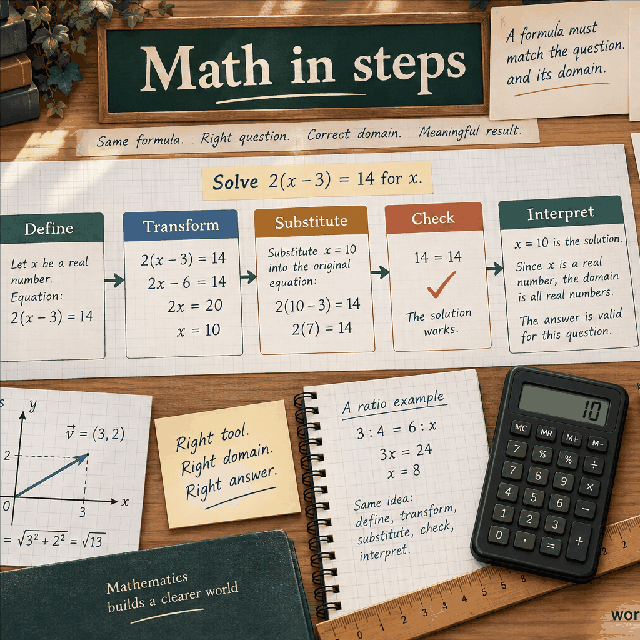
Circumference is the length of the closed ellipse boundary. It is analogous to the circumference of a circle, but the ellipse has two potentially different semiaxes and its boundary curvature changes around the path. The calculator returns one length estimate from a and b. It does not return the area inside the ellipse, the locations of its foci, an equation, or a sampled list of boundary points. Keeping the output narrow avoids treating several related ellipse formulas as one interchangeable calculation.
The word approximate is essential. The exact circumference can be expressed through a special function, while many practical calculations use a high-quality approximation. Ramanujan II is a compact formula based on the semiaxis sum and a shape parameter. It is useful for ordinary geometry estimates, but the result still has model and approximation limits. The displayed number should not be reported with more certainty than the input dimensions and intended use justify.
Field a supplies one semiaxis and field b supplies the other. Unlike a horizontal-and-vertical equation tool, this circumference formula does not need to know which one points along x or y because it is symmetric in a and b. Both values must be positive and finite. A zero semiaxis would collapse the boundary into a limiting segment-like shape and would make the sum denominator invalid, so the handler rejects it rather than extending the model silently.
The fields use generic length units. If a and b are metres, the estimate is in metres; if they are millimetres, it is in millimetres. Do not mix units before entry. The handler accepts JavaScript numbers only and rejects strings, blank values, NaN, infinity, and values outside the displayed range. These software bounds keep the arithmetic finite and predictable, while the underlying geometric formula is not limited to those particular magnitudes.
The formula begins with h=((a-b)/(a+b))^2. Because the difference is squared, h does not depend on which semiaxis is called a or b. Equal semiaxes give h=0. As the ellipse becomes more elongated, the relative difference grows and h increases, while the positive semiaxis sum keeps the expression dimensionless. This parameter is a shape descriptor for the approximation, not the eccentricity returned by a focus calculation.
The estimate is C approximately pi(a+b)[1+3h/(10+sqrt(4-3h))]. The radical is evaluated after the positive input checks and is finite for the bounded positive semiaxis domain. The engine checks the sum, h, radical, and final circumference. It does not numerically integrate the boundary or compare the approximation with a hidden exact reference. That keeps the handler small and the output meaning honest.
Take a=5 and b=3. Their sum is 8 and their difference is 2, so h=(2/8)^2=0.0625. The radical term is sqrt(4-3h)=sqrt(3.8125), approximately 1.952562418. Substituting into the Ramanujan II expression gives pi(8)[1+3(0.0625)/(10+1.952562418)], which is approximately 25.52699886 length units. The calculator stores the numeric estimate without first rounding it and shows the shape parameter in a separate result.
The circle with radius 4 has circumference 2*pi*4, approximately 25.13274123, so the ellipse estimate is somewhat larger for the same semiaxis sum of 8. That comparison is a useful intuition check, not a universal bound for arbitrary ways of holding dimensions fixed. A direct hand check should recompute the sum, difference ratio, square, radical, and final multiplication in that order.
When a=b=r, the ellipse becomes a circle of radius r. The difference a-b is zero, so h=0 and the Ramanujan II formula reduces exactly to pi(2r), which is the ordinary circle circumference in this arithmetic. This is an important boundary because it tests the symmetric formula without requiring a separate branch. The output remains labeled approximate by contract, although the equal-axis reduction has the familiar exact circle form.
Swapping a and b leaves the same sum, squared difference, radical, and circumference. A very small positive semiaxis is allowed if it remains within the displayed bound, but it can produce a small length that should not be mistaken for a resolved physical boundary. The handler rejects zero before forming the ratio. Near-equal measured axes may produce a result close to the circle value, while measurement uncertainty is not represented by h.
An approximation has two different sources of limitation. First, Ramanujan II is not an exact elementary identity for every ellipse, so a small residual approximation error can remain. Second, the entered semiaxes may themselves be rounded, measured, or chosen from an ideal drawing. Reporting many decimal places does not remove either limitation. The calculator names the result approximate and does not claim a universal error percentage for every eccentricity or application.
For ordinary educational and preliminary geometry work, the formula is often a useful compact estimate. If a specification requires a certified tolerance, compare a suitable high-precision method with the uncertainty of the source dimensions and document the acceptance rule. The page does not know that tolerance, does not calculate an exact special-function value, and does not decide whether the residual is acceptable. Those are separate numerical-analysis or engineering decisions.
The pure handler validates both semiaxes as finite numbers within their positive bounds. It computes the sum before division, checks the shape parameter and radical, and checks the final estimated circumference. Negative zero is normalized in numeric outputs. If a direct caller sends a numeric string or non-finite value, the function throws a clear error rather than coercing it. The form-level minimums and handler-level checks reinforce one another.
The result object contains an approximate circumference and the dimensionless h parameter, both numeric and finite. Steps use text notation for the approximation symbol but no special numeric sentinel. The note repeats that the model is approximate and identifies the boundary from an exact perimeter. This makes the output safe for the shared number renderer while preserving the semantic limitation that a number alone could otherwise obscure.
Ellipse circumference is related to ellipse area, standard form, and foci but answers a different visitor question. Area uses pi*a*b and measures the filled region. Standard form uses center and directional semiaxes to define a boundary equation. Foci use a major-minor relationship to locate two interior points. This page accepts only two positive lengths and returns a perimeter estimate; it does not infer a center, orientation, focal distance, or area.
The authoritative formula reference is stored as private catalog metadata for formula review. The article, example, and defaults are original WorldCalculate content and do not copy external wording, code, branding, defaults, or calculator data. The reference supports the approximation's mathematical form, not the accuracy of a visitor's measurements or a later design decision. Public source attribution and private engineering trace remain separate boundaries.
Is the result exact? No. It is the Ramanujan II estimate, and the result label and note say so. Does the order of a and b matter? No, because the shape parameter squares their difference and the rest of the formula uses their sum. Does h mean the center coordinate used in an ellipse equation? No. Here h is a dimensionless approximation parameter; a standard-form page uses h for an x-coordinate, so the two meanings should not be mixed when copying values between tools.
Can this calculator give a guaranteed construction length? Not by itself. It gives a bounded estimate for an ideal ellipse from two entered semiaxes. A real boundary may have thickness, joints, tolerances, deformation, or a shape that is not an exact ellipse. The conservative limit is therefore clear: use the number for transparent approximation and teaching, then apply a domain-specific error budget, measurement review, and safety factor outside the handler when the result controls a consequential choice.
A circle has the elementary circumference 2*pi*r, but a general ellipse boundary length is not represented by the same one-radius expression. Exact evaluation can use a special-function formulation or numerical integration. This page chooses Ramanujan II because it gives a compact estimate from two semiaxes and is easy to explain and reproduce. The word approximate appears in the title, result label, steps, and note so a consumer cannot mistake the estimate for an exact universal identity.
An approximation has a defined purpose: provide a transparent bounded estimate for ordinary geometry work. It is not a substitute for a high-precision method when a specification requires a certified residual. The page does not calculate a reference value, select a tolerance, or report a guaranteed error interval. Those decisions depend on eccentricity, source precision, and application consequence. The output should be passed onward with its approximation status intact.
The expression h=((a-b)/(a+b))^2 is unchanged when a and b are swapped. Their sum is unchanged, and the squared difference removes the sign change. The final estimate is therefore symmetric as well. This differs from the standard-form ellipse tool, where one field is explicitly horizontal and the other vertical. Here the boundary length has no preferred coordinate direction, so the input order can be arbitrary while the two values remain positive semiaxes of one ellipse.
Symmetry does not allow a zero or negative semiaxis. The denominator a+b must be positive, and a collapsed semiaxis is outside the ordinary ellipse contract. It also does not make an input diameter interchangeable with a semiaxis. A diameter is twice its corresponding semiaxis and must be converted before entry. The handler preserves the values provided rather than guessing whether a visitor intended a different dimensional convention.
The equal-axis case is the strongest simple check. If a=b=r, h=0 and the formula becomes pi(2r), the circle circumference. For a=5 and b=5, the estimate is 10pi. If one semiaxis is smaller, h becomes positive and the estimated perimeter changes continuously from the circle value. The equal case is valid and should not be treated as an error merely because the title uses ellipse language.
As the ratio between the two semiaxes becomes more extreme, the shape approaches a long narrow ellipse and the approximation's shape behavior should be considered. The bounded handler accepts positive values within its software range, but it does not declare an application-specific maximum eccentricity or error tolerance. A visually elongated example is useful for understanding the parameter, while a precise boundary requirement still calls for a method selected for that requirement.
To reproduce a result, calculate the semiaxis sum first, then the signed difference, divide, square to obtain h, evaluate the radical sqrt(4-3h), and substitute into the Ramanujan II expression. Keeping this order visible helps distinguish a wrong denominator from a wrong approximation. For the example 5 and 3, sum=8, h=0.0625, radical=sqrt(3.8125), and the estimate is about 25.52699886. The handler exposes h as a second numeric result for this reason.
A circle comparison can catch a gross scale error, but it is not a proof of exactness. Compare the equal-axis reduction with 2*pi*r, swap the two semiaxes, and resize both by a known factor. The estimate should be symmetric and should scale linearly with a common length factor because circumference is a length. If a high-consequence calculation depends on the residual, compare against an independent exact or numerical-integration implementation.
The shape parameter h is dimensionless because it is a squared ratio of lengths. The circumference estimate has the same linear unit as a and b. If both semiaxes are converted from metres to centimetres, the estimated circumference is multiplied by one hundred, not by ten thousand. The calculator has no unit selector and cannot detect a mixed-unit input. Convert both values to a common unit and retain that unit with the result before using it elsewhere.
Measurement precision limits the useful precision of the estimate. If the semiaxes are rounded to the nearest millimetre, reporting twelve meaningful digits in the circumference does not recover the missing measurement information. Approximation residual, input uncertainty, and display rounding are separate sources of limitation. The pure handler returns a finite unrounded number for predictable reuse, while the renderer's precision should be chosen for the source and purpose.
Before accepting the result, confirm that a and b are semiaxes rather than diameters, that both are positive, and that they share one length unit. Check that the title and result label say approximate. Recompute h and the radical from the displayed inputs, then compare the circle limit if the axes are equal. If a source shape is rotated, the circumference itself is rotation-invariant, but the two values still need to represent the actual semiaxes of that shape rather than arbitrary bounding-box dimensions.
For software review, call the handler with defaults, equal axes, swapped axes, small positive axes, and bounded large axes. Reject zero, negative, nonfinite, and out-of-range values. Assert finite numeric outputs and no negative zero. The catalog contract should remain separate from the standard-form and foci handlers even though all three use ellipse vocabulary. That separation is a safeguard against routing an approximate perimeter request to an equation or focus calculation.
A useful handoff includes a, b, the computed shape parameter h, the approximate circumference, and the intended acceptance tolerance. The tolerance should be chosen from the application and source measurements, not from the number of digits shown by the renderer. If the result is used for a cut length, compare the approximation residual and dimensional uncertainty with the allowable margin before accepting it. The calculator does not make that acceptance decision because it has no material, process, or specification fields.
For teaching or preliminary geometry, the estimate can be compared with the circle limit, a numerical integration result, or another reviewed method. Such comparisons should preserve the same semiaxes and units and should identify whether differences arise from approximation, rounding, or input conversion. The pure handler remains intentionally transparent and deterministic; it does not hide a second exact calculation behind the displayed estimate or imply a guarantee it did not compute.
Use this estimate when two positive semiaxes and a transparent approximation are sufficient for the question. Stop and choose a different method when the result must be exact, when an acceptance tolerance is specified, or when the boundary comes from uncertain measurements that need error propagation. The calculator makes that decision visible by returning the shape parameter and repeating approximation status rather than presenting one unexplained perimeter number.
The public result should retain the same semiaxes and unit convention used in the calculation. This allows a reviewer to reproduce the estimate, compare the equal-axis circle case, and identify whether a later difference came from a changed shape or a different method. The handler remains a small bounded estimate and does not silently become a numerical-integral, fit, or certification tool.
Estimate the circumference of an ellipse with the clearly labeled Ramanujan II approximation and its shape parameter.
h=((a-b)/(a+b))^2; C ~= pi(a+b)[1+3h/(10+sqrt(4-3h))]. Ramanujan II estimates an ellipse circumference from two positive semiaxes without requiring numerical integration. The result is labeled approximate because a general ellipse circumference is not represented by an elementary exact formula and approximation error depends on shape.
Enter Semiaxis a, Semiaxis b, then choose Calculate.
a and b are positive semiaxes of one ideal axis-aligned ellipse and use the same length unit. The two semiaxes may be entered in either order; the shape parameter uses their squared relative difference. The returned circumference is a Ramanujan II estimate, not an exact perimeter, measurement uncertainty interval, or engineering tolerance.
This calculator is part of the WorldCalculate library. Its formula, example, assumptions, input bounds, and output formatting follow the official methodology.
These WorldCalculate collections connect this tool with related questions while keeping each calculation separate and transparent.