
Goal
Convert cubic centimetres into US fluid ounces, millilitres, US cups, and litres while keeping volume ounces separate from mass ounces.
Worldwide context
Saved once here, used across the site.
Currency changes display only. Country selection guides tax input; no tax rate is guessed.
Convert cubic centimetres into US fluid ounces, millilitres, US cups, and litres while keeping volume ounces separate from mass ounces.
1 cm³ = 1 mL; US fluid ounces = mL ÷ 29.5735295625; US cups = mL ÷ 236.5882365; litres = mL ÷ 1000.A clearer path to an answer
This page keeps the calculation transparent: define the goal, enter the matching values, inspect the method, and decide what the result means in your situation.
Convert cubic centimetres into US fluid ounces, millilitres, US cups, and litres while keeping volume ounces separate from mass ounces.
Cubic centimetres
1 cm³ = 1 mL; US fluid ounces = mL ÷ 29.5735295625; US cups = mL ÷ 236.5882365; litres = mL ÷ 1000.
Calculate, review the assumptions below, then compare a related tool when the decision needs more context.
Convert cubic centimetres into US fluid ounces, millilitres, US cups, and litres while keeping volume ounces separate from mass ounces.
Open the Cubic Centimetres to US Fluid Ounces Converter pageMore conversion tools
Download PDFDownload Word (.doc)
Enter your values above and choose Calculate to see the result here.
Calculation map
1 cm³ = 1 mL; US fluid ounces = mL ÷ 29.5735295625; US cups = mL ÷ 236.5882365; litres = mL ÷ 1000.
Bounded, transparent calculation
Your recent runs stay in this browser session only.
Formula: 1 cm³ = 1 mL; US fluid ounces = mL ÷ 29.5735295625; US cups = mL ÷ 236.5882365; litres = mL ÷ 1000.
Cubic centimetres and millilitres have the same numerical volume in this range. The ounce output is US fluid volume, not weight; the page also shows millilitres, cups, and litres so the unit path can be checked.
Worked example: 250 cm³ = 250 mL ≈ 8.4535 US fluid ounces, 1.0567 US cups, and 0.25 L.
The displayed limits are checked before the handler runs. Model-specific domain checks may also reject impossible or non-finite inputs.
Methodology: This calculator follows the WorldCalculate input, formula, precision, and boundary policy. Read the official methodology.
Calculator usage statistics
This section counts anonymous successful Calculate submissions, not unique visitors. Counts and top tools appear only when trusted aggregate data is available; country analysis is shown only under the same condition and reporting threshold.
Answer-first guide
Convert cubic centimetres into US fluid ounces, millilitres, US cups, and litres while keeping volume ounces separate from mass ounces. Start with one clearly defined goal, enter values in the units shown, and keep the result attached to the assumptions below.
This tool is useful when your question includes cc to oz converter, cm3 to fluid ounces, cubic centimeters to ounces. It returns the outputs declared in the calculator contract rather than a live quote, approval, diagnosis, or professional sign-off.
Cubic centimetres. Keep the same time period, unit system, and currency wherever the form requires comparable values.
Run the worked example first, compare its output with the page's example, then change one input at a time. This makes an unexpected result easier to trace to a unit, boundary, or assumption.
Need a wider view? Browse Unit Converters or compare the related tools below. The WorldCalculate methodology explains how formulas, examples, limits, and revisions are reviewed.
1 cm³ = 1 mL; US fluid ounces = mL ÷ 29.5735295625; US cups = mL ÷ 236.5882365; litres = mL ÷ 1000.
Cubic centimetres and millilitres have the same numerical volume in this range. The ounce output is US fluid volume, not weight; the page also shows millilitres, cups, and litres so the unit path can be checked.
250 cm³ = 250 mL ≈ 8.4535 US fluid ounces, 1.0567 US cups, and 0.25 L.
Context and background
A conversion must name both the source and destination definitions. Regional gallons, miles, temperature scales, and data prefixes can look similar while representing different quantities.
Standardized units make measurements comparable across countries and disciplines. The reliable pattern is a defined factor or relationship followed by clear labeling and sensible rounding.
Research and review
Researched by Hassan ALRowaie, Founder and editorial researcher at WorldCalculate.
This guide follows the live calculator's declared inputs, formula, worked example, assumptions, validation boundaries, and source-backed methodology. The review date describes editorial review of the calculator explanation; it is not a promise that external facts or rates remain current.
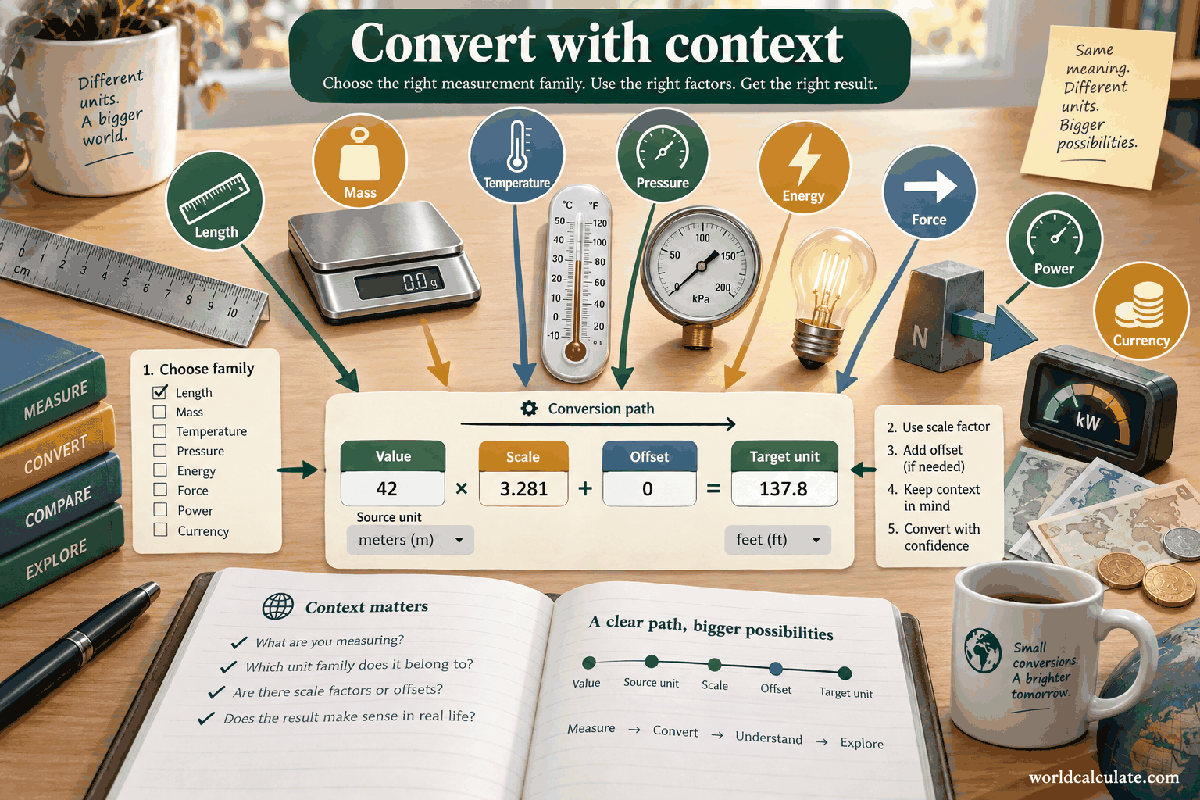
A label that says cc, cm³, mL, or fluid ounces is describing volume, but the abbreviations are easy to mix up with mass ounces. This converter shows the volume path and names the US convention used for the customary outputs.
CC is a common abbreviation for cubic centimetre. In the metric system, one cubic centimetre has the same volume as one millilitre, so the first step does not require a density value.
After converting cubic centimetres to millilitres, divide by the US fluid-ounce volume factor. The result is a liquid-volume amount, not a weight.
For 250 cm³, the metric volume is 250 mL. Dividing by 29.5735295625 gives about 8.4535 US fluid ounces; dividing by 236.5882365 gives about 1.0567 US cups.
A fluid ounce measures space occupied by a liquid. An ounce by mass measures how much matter is present. Converting between them requires the material density and cannot be done from volume alone.
The US fluid ounce is not the same size as the UK imperial fluid ounce. Recipe and product labels can use different regional conventions, so choose a matching tool and retain the label’s country context.
Showing multiple outputs helps detect a misplaced decimal. A litre is 1,000 millilitres, while the US cup output uses the stated customary factor; neither output changes the original measured volume.
Entering grams, using a mass-ounce conversion, and treating a cup as an unspecified mug are common errors. If the source records a mass, use a density-aware mass-volume calculator instead.
This page performs unit arithmetic only. It does not prescribe a dose, serving, fill level, or product conversion rule when a package explicitly specifies a different regional standard.
Convert cubic centimetres into US fluid ounces, millilitres, US cups, and litres while keeping volume ounces separate from mass ounces.
1 cm³ = 1 mL; US fluid ounces = mL ÷ 29.5735295625; US cups = mL ÷ 236.5882365; litres = mL ÷ 1000. Cubic centimetres and millilitres have the same numerical volume in this range. The ounce output is US fluid volume, not weight; the page also shows millilitres, cups, and litres so the unit path can be checked.
Enter Cubic centimetres, then choose Calculate.
The input is a volume in cubic centimetres, not a mass in grams. One cubic centimetre is treated as one millilitre. The ounce result uses the US fluid-ounce convention. The cup result uses the US customary cup convention. UK imperial fluid ounces and metric cups are not silently substituted. Ingredient density is not needed because no mass conversion is performed. The displayed factors are deterministic decimal conversion factors and may be rounded for display. The converter does not assess dosage, serving size, or product safety.
This calculator is part of the WorldCalculate library. Its formula, example, assumptions, input bounds, and output formatting follow the official methodology.
These WorldCalculate collections connect this tool with related questions while keeping each calculation separate and transparent.