
WorldCalculate guide
Receivables Turnover, Collection Days, and Working Capital
Use receivables, average collection, and working-capital metrics to understand cash timing without confusing accounting revenue with collected cash.

Start with the answer path
Turn this guide into a checked result
Read the explanation, then use the primary calculator with your own numbers. Related tools are included so you can test the next assumption without leaving the topic.
Short answer: Use Receivables Turnover and DSO to connect sales with the time a business waits for cash. A business can record sales and still wait for cash. Receivables turnover, average collection period, and working capital describe different parts of that timing problem.
Picture the moment before a business decision: the spreadsheet has a result, but another person still needs to understand what changed and what could go wrong.
What this guide helps you decide
By the end, you should be able to define the question, prepare the inputs, run the Receivables Turnover and DSO, and explain what the result means in the real situation. The goal is a checkable decision record—not a number detached from its units, date, assumptions, and limits.
- Identify the input that most changes the answer.
- Compare a supported base case with a conservative alternative.
- Choose the next calculator, document, measurement, or qualified review when this model is not enough.
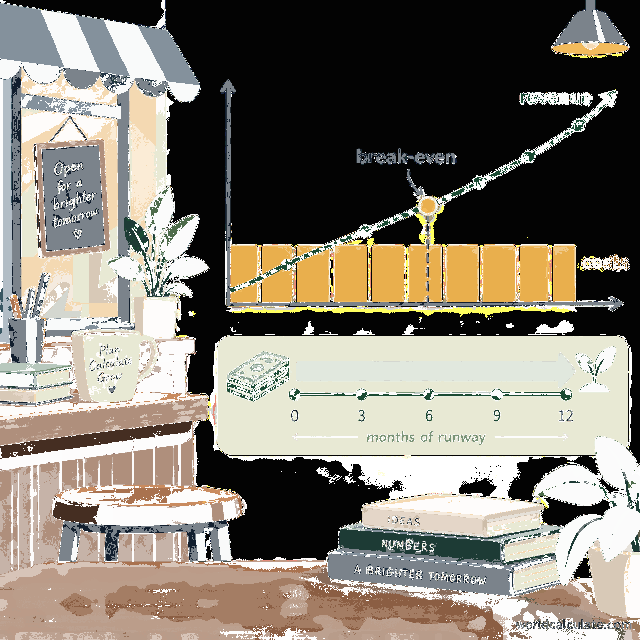
Name the cash-timing question
Receivables turnover asks how many times credit sales convert through average receivables in a period. Average collection period expresses the result as days under a selected day-count convention. Working capital compares current assets and current liabilities. Cash reconciliation explains why book and bank balances differ.
Use Receivables Turnover for activity, Average Collection for days, Cash Conversion Cycle for operating timing, and Working Capital for a balance-sheet snapshot. One metric cannot replace the others.
- Define credit sales and average receivables.
- State the period and day-count convention.
- Keep accounting balances separate from bank cash.
Next useful step: Put this idea into practice with Average Collection Period Calculator.
The receivables-turnover relationship
Receivables turnover commonly divides credit sales by average accounts receivable. A higher turnover can indicate faster collection under the same accounting policy, but it can also reflect a different customer mix, credit policy, or denominator.
Use average receivables rather than only ending receivables when the contract calls for an average. If beginning and ending balances are used, record how the average is constructed.
- Use the same period for sales and receivables.
- Identify cash versus credit sales.
- Document the averaging method.
Next useful step: For the next part of the same question, try Cash Conversion Cycle Calculator.
Worked collection-period example
Suppose credit sales are 600,000 and average receivables are 75,000. Turnover is 8 times. Under a 365-day convention, the average collection period is about 45.6 days. The result is a ratio-derived average, not a promise that every invoice is paid in that time.
Compare the result with aging data. A good average can hide a group of severely overdue accounts, while a temporary large invoice can distort one period.
- Show turnover and days together.
- Use the day-count convention beside the result.
- Compare with invoice-level aging when making decisions.
Next useful step: For the next part of the same question, try Working Capital Calculator.
Working capital adds liquidity context
Working capital is current assets minus current liabilities under the entered balance sheet. Receivables can be current assets but may not be immediately collectible. A positive working-capital result does not guarantee enough cash to pay a bill today.
Use Cash Reconciliation to trace bank and book balances and Cash Conversion Cycle to connect inventory, collection, and supplier payment timing. Keep the balance-sheet snapshot and cash-flow timing distinct.
- Separate receivables from available cash.
- List inventory and payables assumptions.
- Use the balance-sheet date beside the result.
Next useful step: For the next part of the same question, try Cash Reconciliation Calculator.
Collection policy affects the metric
Payment terms, credit checks, deposits, disputes, billing errors, customer concentration, and collection practices can change receivables. A slower result may reflect intentional growth or a problem. The calculator cannot identify the cause.
Use the metric to ask operational questions: which customers are overdue, which invoices are disputed, and whether terms match cash needs? Then inspect actual records.
- Connect the ratio with invoice aging.
- Review disputes and billing timing.
- Do not change credit policy from one period alone.
Next useful step: For the next part of the same question, try Receivables Turnover and DSO.
Common accounting mistakes
Common mistakes include using total revenue when the formula requires credit sales, using ending receivables when average is required, mixing monthly and annual periods, and treating turnover as a cash balance. Another is comparing businesses with different policies without adjusting the definitions.
Check dimensions: sales divided by receivables should be a number of turns; turns converted by days should produce days. If the units do not make sense, revisit the inputs.
- Match numerator and denominator definitions.
- Keep period and day count consistent.
- Compare like accounting policies.
Next useful step: For the next part of the same question, try Average Collection Period Calculator.
Use a cash-conversion workflow
Start with receivables turnover and average collection days. Add inventory days and payable days in Cash Conversion Cycle. Then review Working Capital and Cash Reconciliation to see whether the operating result appears in available cash.
This sequence turns a ratio into a management question without claiming that one metric proves business health. Use actual ledger and bank records for the final decision.
- Link metrics through the same reporting period.
- Keep observed data separate from targets.
- Review cash, not only accounting ratios.
Next useful step: For the next part of the same question, try Cash Conversion Cycle Calculator.
Document the period and source
Record credit sales, beginning and ending receivables, day-count convention, reporting date, accounting policy, and any exclusions. Preserve the source statements and explain changes between periods.
WorldCalculate provides transparent formulas. Accounting policy, audit evidence, customer records, and management judgment determine how the result should be acted on.
- Put the reporting date beside each metric.
- Keep formula inputs traceable to records.
- Use professional accounting support for consequential reporting.
Next useful step: For the next part of the same question, try Working Capital Calculator.
Turn the search question into a decision
People usually arrive at this guide with a practical question, not a desire to see an isolated number. For this business planning problem, write the decision in one sentence: what must be compared, planned, checked, or learned, and by when? Then write what a useful answer would change. If the result will not change a choice, the measurement or model may need to be simplified.
The Receivables Turnover and DSO is designed for a defined scenario. It uses Net credit sales, Average receivables and returns the output stated in its contract. That makes the result reproducible, but it also means the answer is limited to the facts you enter. A calculator cannot fill an unknown value with a reliable guess simply because a search result sounds confident.
- State the person, project, product, or data set represented by the inputs.
- State the time period and unit system before entering values.
- State the decision boundary: what the result may inform and what requires another source.
- Keep a dated copy of the assumptions when the result will be shared.
Prepare the inputs so the answer can be checked
Make a small input worksheet with four columns: field name, value, unit or convention, and evidence or reason. The fields in this calculator are Net credit sales, Average receivables. If a field has a hint or range, treat that text as part of the contract rather than as optional decoration. A value can be numerically valid and still be unsuitable if it describes the wrong period, person, surface, or denominator.
Use one source of truth for repeated values. For example, do not enter an annual total in one field and a monthly amount in another unless the formula explicitly expects that relationship. Keep full precision during intermediate work, record when a value was rounded, and do not hide a conversion inside an unlabeled number. When a value is estimated, label it as an estimate and create a conservative alternative.
Before pressing Calculate, read the form from top to bottom. Check sign, scale, percentage convention, starting point, endpoint, and whether a field is a total, rate, balance, quantity, or count. These checks make an answer easier to reproduce for a student, household member, client, teammate, or reviewer.
Walk from the formula to the displayed result
The declared formula is turns = creditSales / avgAR; DSO = 365 / turns.. Read it as a sequence, not as a black box: identify the inputs, apply any conversion or normalization, perform the operation, and interpret the output in the requested unit. If the formula includes a rate or percentage, write its period beside it before substituting values.
The built-in example is a controlled test because it uses known values. Its input record is:
| Field | Example value |
|---|---|
| CreditSales | 800000 |
| AvgAR | 100000 |
Expected example interpretation: Turns 8.00; DSO 45.625 days. Compare the live result with this statement, then change only one input. If the example does not match, check the calculator version, field units, rounding, and copied value before building a personal scenario.
A good walkthrough explains what each operation means in the real problem. It also explains what the result does not mean. Keep the formula and the plain-language interpretation together when you export, cite, or discuss the calculation.
Use a three-case scenario lab
One scenario answers “what happens if these assumptions hold?” A decision usually needs at least three: a base case using the best-supported inputs, a conservative case that reflects an unfavorable but plausible change, and a decision case that represents the action you are considering. Keep all unchanged inputs identical so the difference has a clear cause.
| Case | Purpose | Change one named assumption |
|---|---|---|
| Base | Best current description of the question | Use the dated values you can support |
| Conservative | Test a less favorable outcome | Change rate, cost, quantity, time, capacity, or measurement with a reason |
| Decision | Test the action or target | Change the input that the decision can actually control |
Compare both the output and the changed assumption. A larger answer is not automatically better, and a smaller answer is not automatically safer. Ask whether the change is realistic, whether it creates a second-order cost, and whether another calculator or professional source is needed. Save the scenario name with the result so a later reader does not confuse a stress test with a forecast.
A strategy that fits business planning
Treat the output as one line in a small operating model. Put price, variable cost, fixed cost, volume, timing, and cash availability in separate rows. A margin result can describe unit economics while a break-even result describes the volume needed to cover fixed costs. Keeping those denominators separate prevents a healthy-looking percentage from hiding an impossible sales target.
A calculator cannot know demand, customer concentration, payroll obligations, inventory risk, financing terms, or local tax rules. Before committing money, compare the model with bookkeeping records, supplier terms, signed contracts, and the advice of the responsible accountant or business professional.
Find a practical saving or efficiency move
Look for the smallest controllable change that improves the decision: reduce avoidable variable cost, improve the contribution per sale, remove an unnecessary fixed commitment, shorten collection time, or change the launch sequence. Model each action separately and keep the service level, staffing, quality, and tax treatment visible. Savings are only real when the cost can be removed without moving it to another line.
To test a saving honestly, record the baseline result, the changed input, the new result, and the cost of implementing the change. Do not count a saving twice by reducing two fields that represent the same action. If the tool does not model a fee, quality change, delay, risk, or opportunity cost, keep that item in the written decision note rather than implying it disappeared.
Small improvements become useful when they are repeatable. Set a review date, decide what evidence will show whether the assumption was right, and rerun the same scenario when the underlying value changes. A saved calculation is a decision record, not a promise that the world will keep the same inputs.
Diagnose an unexpected result
When the answer looks surprising, do not immediately change the formula. Recheck the problem in this order: field label, unit, time period, sign, percentage convention, denominator, starting value, endpoint, rounding, and model boundary. Then rerun the built-in example. If the example is correct but the personal result is not useful, the issue is probably the scenario definition rather than the arithmetic.
Use the declared assumptions as a diagnostic list:
- Annual credit sales and average receivables share one currency and one year.
- DSO uses a 365-day year and an even collection pace.
Report a possible correction with the calculator name, every input and unit, the displayed result, the expected result, and the exact step where the interpretation differs. That evidence is more actionable than saying that a number “looks wrong.”
Adapt the result to the person using it
The tool is useful for anyone who needs a transparent scenario and can supply the required inputs. The right level of detail depends on whether the reader is learning the method, planning a household or project, comparing options, or reviewing someone else’s work.
For shared work, send the question, inputs, units, scenario name, result, formula, assumptions, and date together. For learning, explain the substitution before the final answer. For a material decision, add the authoritative document or professional review that sits outside the calculator.
Save a result that remains useful later
A durable record has a descriptive scenario title, the question it answers, the values entered, units and conventions, the formula or method, the displayed result, the date, and the next action. Include the version or page path when a calculation may be rerun later. If a value came from a quote, label, measurement, gradebook, training log, or experiment, keep that evidence with the record.
Review the record when an input changes, when the decision becomes more important, or when the result will be reused for another person. Do not silently edit an old result. Duplicate the scenario, change one assumption, and explain why the new answer differs. This creates an audit trail and makes the page useful beyond the first visit.
WorldCalculate keeps formulas, examples, assumptions, and boundaries visible so readers can learn the method. The final responsibility still belongs to the person, institution, professional, or authority that owns the decision.
Final checklist before you act
- Does the calculator answer the exact question, not a similar one?
- Are the person, project, period, units, and denominator consistent?
- Did the built-in example or an independent hand check reproduce the method?
- Did you run a conservative case and identify the assumption that changed?
- Did you record limits, excluded costs, uncertainty, and the next action?
- Does a regulated, medical, legal, financial, safety, or official decision require a qualified reviewer?
If these checks pass, open the Receivables Turnover and DSO and run the scenario with your own values. Use a related tool only when it answers a clearly different part of the same problem.
Use the calculator as a checked method
Collection turns per year and days sales outstanding from credit sales.
This guide connects the real problem in “Receivables Turnover, Collection Days, and Working Capital” to the exact contract of the Receivables Turnover and DSO. Start with the question, then choose inputs that represent the same person, project, period, and unit system. A precise number cannot repair an input that describes a different situation.
Inputs and units to check
- Net credit sales — Annual net credit sales; must be greater than zero.
- Average receivables — Average accounts receivable balance; must be greater than zero.
Before calculating, read every label and hint. Keep annual, monthly, daily, per-serving, per-unit, and percentage values in the period expected by the field. If a field represents a rate, record the rate convention; if it represents a total, do not enter a balance or a per-unit value by accident.
Formula and method
Published formula: turns = creditSales / avgAR; DSO = 365 / turns.
Turnover counts how many times receivables are collected per year. DSO converts that into the average days from sale to cash using a 365-day year.
The useful review question is not only “what number appeared?” It is “what does this number represent, which inputs produced it, and which important facts are outside the model?” Keep the formula, units, rounding, and assumptions beside any result you save or share.
Worked example from the calculator contract
Run the built-in example first so the article and the live calculator can be compared. The supplied example inputs are:
- CreditSales
- 800000
- AvgAR
- 100000
Expected contract result: Turns 8.00; DSO 45.625 days.
After the example matches, change one input at a time. That isolates what moves the answer and gives you a simple sanity check. If the output changes in a way the formula does not explain, stop and inspect the units, sign, endpoint, rate, denominator, or chosen calculator.
Compare scenarios without hiding the trade-off
Build a base case, a conservative case, and a decision case. Keep the unchanged inputs identical and name the one change: a different rate, target, quantity, time horizon, distance, cost, workload, or measurement. Record both the result and the assumption that changed. This makes the tool useful for learning and planning rather than turning one output into a promise.
Use the result to choose a next question. A home estimate may need a budget and debt view; a recipe quantity may need a pan or cooking check; a health estimate may need personal context; a statistical result may need a design or sampling check; a construction quantity may need product coverage and site measurement. The related tools below are deliberately connected by topic.
Common mistakes and model limits
The calculator’s declared assumptions are part of the answer:
- Annual credit sales and average receivables share one currency and one year.
- DSO uses a 365-day year and an even collection pace.
Do not add facts the calculator does not collect. WorldCalculate does not silently know a lender’s approval policy, a country’s tax rule, a person’s diagnosis, a product’s live price, a school’s grading policy, a weather station, or a construction site. Replace planning assumptions with authoritative documents or qualified advice when the decision is regulated, safety-critical, medical, legal, or financially material.
Frequently asked questions
What is the Receivables Turnover and DSO?
Collection turns per year and days sales outstanding from credit sales.
What is the formula for the Receivables Turnover and DSO?
turns = creditSales / avgAR; DSO = 365 / turns. Turnover counts how many times receivables are collected per year. DSO converts that into the average days from sale to cash using a 365-day year.
What do I need to use this calculator?
Enter Net credit sales, Average receivables, then choose Calculate.
What are the limits of this calculator?
Annual credit sales and average receivables share one currency and one year. DSO uses a 365-day year and an even collection pace.
A useful next action
Open the Receivables Turnover and DSO, enter the worked example, then replace one value with your own. Save the result with its date, units, assumptions, and the question it answers. If the result is used for a high-stakes decision, take the saved calculation to the person or organization responsible for the final decision.
Use the calculators in this guide
These tools turn the guide’s concepts into transparent, checkable calculations. Open the one that matches your question.
Methodology and scope
WorldCalculate guides explain one problem at a time and link to the calculator contracts they use. Check each tool’s formula, inputs, worked example, and assumptions before applying a result to a real decision.
Learn before you calculate
Keep learning with another guide
Choose a different but related question, then follow its calculator path.
How to Use Heart-Rate Zones Without Treating an Estimate as a Prescription
Connect maximum-heart-rate estimates, zone percentages, pace, and sleep context while keeping individual variation and medical advice visible.
Read the guide →Caffeine Half-Life and Sleep Timing: Build a Personal Scenario Carefully
Model caffeine remaining over time and connect it to sleep timing without presenting a population-average half-life as a personal medical prediction.
Read the guide →BAC Estimates and Alcohol Units: Understand the Limits of the Math
Use alcohol amount and time calculations as educational estimates only, with safety, impairment, law, and individual variation kept explicit.
Read the guide →